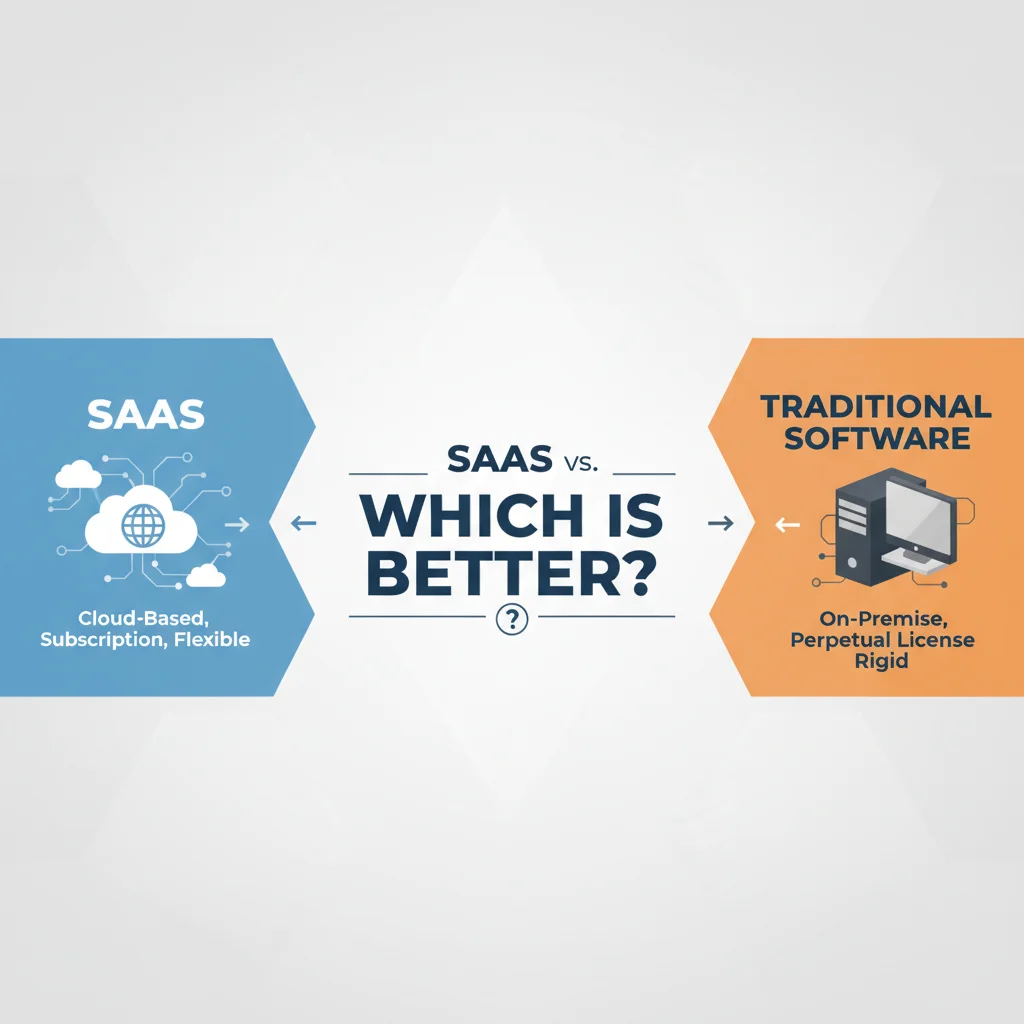
SaaS vs Traditional Software: Which Solution is Right for Your Business?
In today's digital landscape, businesses face a critical decision when selecting software solutions: Should they opt for Software-as-a-Service (SaaS) or stick with traditional on-premise software? This question has become increasingly important as organizations seek to optimize costs, improve flexibility, and enhance operational efficiency. Understanding the differences between these two approaches is essential for making an informed decision that aligns with your business goals.
Understanding the Fundamental Differences
Before diving into comparisons, it's crucial to understand what distinguishes SaaS from traditional software. Traditional software, also known as on-premise software, is installed and run on computers or servers within your organization. You purchase a license, deploy the software on your hardware, and maintain it internally. In contrast, SaaS solutions are cloud-based applications accessed through web browsers. A SaaS development company builds and maintains the software, hosting it on cloud servers and delivering it to users via the internet.
Cost Considerations: Initial Investment vs. Ongoing Expenses
Traditional Software Expenses
Traditional software typically requires significant upfront capital investment. Organizations must purchase licenses, acquire hardware infrastructure, and allocate resources for installation and configuration. Additional costs include ongoing maintenance, updates, patches, and dedicated IT personnel to manage the software. For small to medium-sized businesses, these expenses can quickly become prohibitive.
SaaS Pricing Model
SaaS operates on a subscription-based model, typically charged monthly or annually. This approach eliminates large upfront capital expenditures, making it more accessible for businesses of all sizes. You pay for what you use, and costs are predictable and scalable. A professional SaaS development company handles all infrastructure, maintenance, and updates, shifting these responsibilities away from your organization.
Deployment and Implementation Speed
One of SaaS's most compelling advantages is rapid deployment. Cloud-based solutions can be implemented within days or weeks, allowing your team to become productive quickly. Users simply log in with credentials, and the software is ready to use. Traditional software, conversely, requires lengthy implementation timelines involving hardware procurement, installation, configuration, and staff training. This extended deployment period can delay business benefits and increase implementation costs.
Scalability and Flexibility
Growing with Your Business
SaaS solutions excel in scalability. As your business grows, you can easily add more users, increase storage, or upgrade features with minimal friction. The infrastructure adjusts automatically to handle increased demand. Traditional software requires manual scaling, often necessitating hardware upgrades, additional licenses, and increased IT resources. This inflexibility can hinder business growth and agility.
Customization Capabilities
While SaaS platforms offer less customization than traditional software, modern SaaS development companies provide extensive configuration options, APIs, and integration capabilities. Traditional software allows deeper customization but requires specialized developers and significant investment. The choice depends on whether you need unique features or standard functionality with flexibility.
Security and Data Protection
SaaS Security Advantages
Modern SaaS providers invest heavily in security infrastructure, including encryption, multi-factor authentication, and regular security audits. Professional SaaS development companies maintain enterprise-grade security standards, often exceeding what individual organizations can achieve independently. Cloud providers benefit from economies of scale, dedicating resources to security that most businesses cannot match.
Traditional Software Security Concerns
With on-premise software, your organization bears full responsibility for security. You must implement firewalls, conduct regular security updates, manage patches, and monitor systems continuously. Any security breach is your liability. While this offers control, it requires significant expertise and resources to maintain adequate protection.
Maintenance and Updates
SaaS providers automatically handle updates, patches, and maintenance, ensuring your system remains current and secure without disrupting your operations. Traditional software requires your IT team to schedule and implement updates, often causing downtime and requiring extensive testing. This ongoing maintenance burden consumes IT resources that could be directed toward strategic initiatives.
Accessibility and Remote Work
In the era of distributed workforces, SaaS's accessibility from anywhere with an internet connection is invaluable. Employees can work remotely seamlessly, improving flexibility and work-life balance. Traditional software, tied to specific servers or locations, complicates remote access and requires additional infrastructure like VPNs and remote desktop solutions.
Integration and Ecosystem Compatibility
Leading SaaS development companies design their products to integrate seamlessly with popular business applications through APIs and pre-built connectors. This ecosystem approach reduces integration complexity and enables powerful workflows. Traditional software integration often requires custom development and ongoing maintenance, adding cost and complexity.
Vendor Lock-in and Data Portability
A legitimate concern with SaaS is vendor lock-in. Switching providers can be challenging if data export options are limited. However, reputable SaaS providers offer data portability features. Traditional software eliminates this concern but makes switching costly due to retraining, data migration, and re-implementation expenses. Evaluate vendor transparency and data ownership terms carefully when selecting a SaaS solution.
Performance and Downtime Risks
Traditional software performance depends entirely on your infrastructure quality and maintenance. SaaS performance relies on your internet connection and the provider's infrastructure. Most professional SaaS development companies guarantee 99.9% uptime through service level agreements (SLAs), providing reliability assurance. However, internet outages can render SaaS inaccessible, whereas on-premise software functions independently of internet connectivity.
Compliance and Regulatory Requirements
Organizations in regulated industries must carefully evaluate both options against compliance requirements. Many SaaS providers maintain certifications for HIPAA, GDPR, SOC 2, and other standards, often simplifying compliance. Traditional software requires your organization to ensure compliance independently. For highly regulated industries, verify that your chosen solution—whether SaaS or traditional—meets all necessary requirements.
Making Your Decision: Key Factors to Consider
- Budget constraints: Limited capital favors SaaS; larger budgets may justify traditional software investment
- Organizational size: Small to mid-size companies typically benefit from SaaS; large enterprises may prefer traditional software for customization
- Technical expertise: Limited IT resources favor SaaS; extensive IT teams can manage traditional software
- Customization needs: Standard requirements favor SaaS; unique needs may require traditional software
- Integration requirements: Modern integration needs favor SaaS; legacy system integration may require traditional software
- Growth trajectory: Rapidly growing companies benefit from SaaS scalability
- Industry regulations: Highly regulated industries need solutions with comprehensive compliance certifications
Conclusion: SaaS Development Company Solutions Lead the Modern Enterprise
The question of SaaS versus traditional software doesn't have a universal answer—it depends on your specific business needs, budget, and organizational structure. However, trends clearly favor SaaS. Modern SaaS development companies provide cost-effective, scalable, secure, and flexible solutions that align with contemporary business demands. The combination of lower costs, faster implementation, automatic updates, and remote accessibility makes SaaS the preferred choice for most organizations today.
Traditional software retains value for organizations with unique customization requirements, strict data residency needs, or industry-specific demands. However, even enterprises increasingly adopt hybrid approaches, combining cloud-based SaaS solutions with selective on-premise systems.
When evaluating solutions, partner with experienced SaaS development companies that understand your industry, offer transparent pricing, provide strong security certifications, and demonstrate commitment to customer success. By carefully weighing the factors outlined above, you'll make a strategic decision that positions your organization for growth and success in an increasingly digital business environment.